
I. What are the components of a diesel generator set?
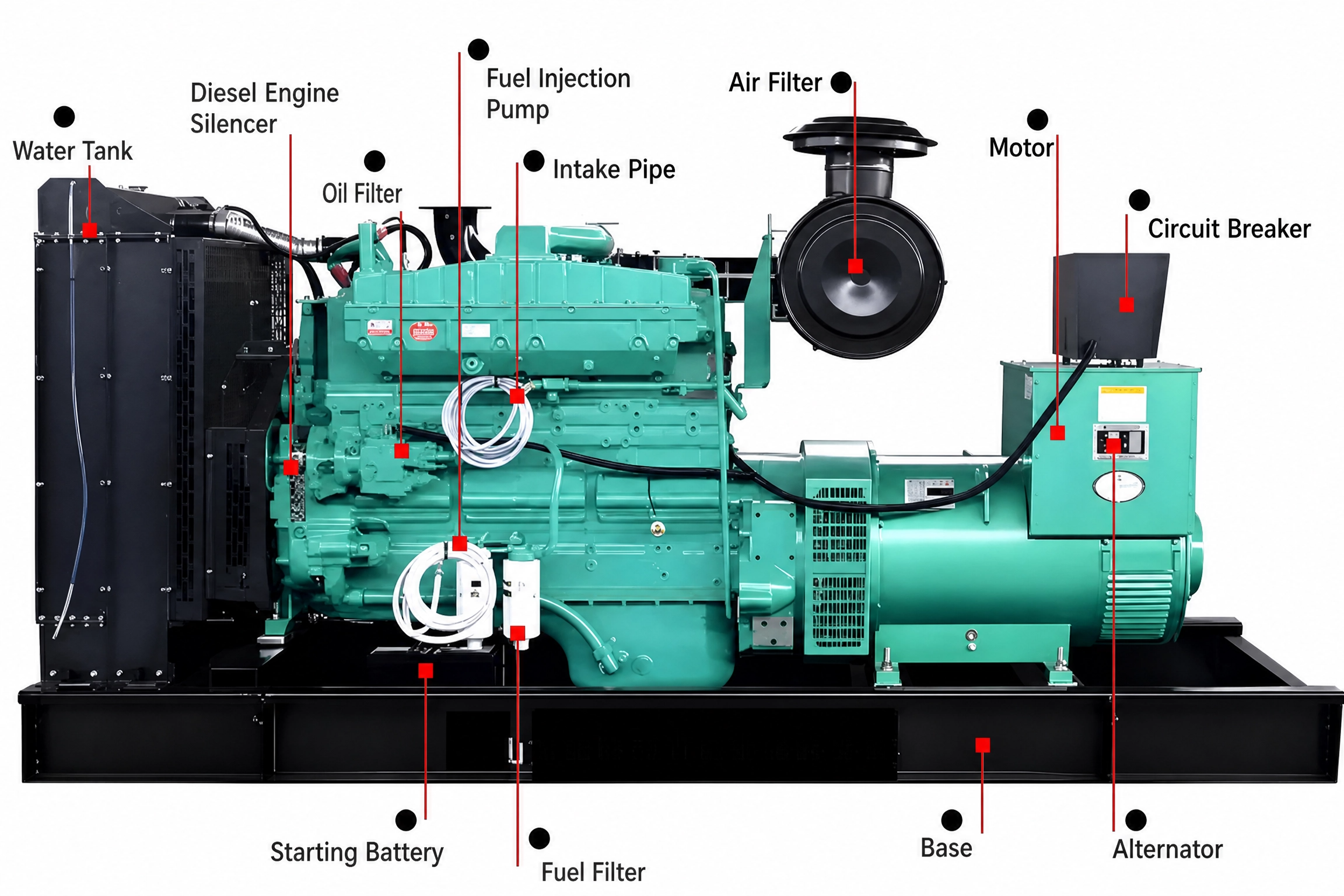
A diesel generator set consists of three main components: the diesel engine, the generator, and the control system. Its basic configuration includes the fuel supply system, lubrication system, cooling system, fuel tank, and starter battery pack.
II. How Does a Diesel Generator Produce Electricity?
Press the start button (or auto‑start upon power failure). The starting battery supplies power to the diesel engine starter motor to run the diesel engine. The crankshaft drives the generator rotor to rotate. As the generator rotor cuts magnetic field lines, electric energy is output.
1. Operating Principle of Diesel Engine
1.1 Starting
The unit is equipped with a starting storage battery, which is mainly used to drive the diesel engine starter motor for engine start‑up.
1.2 Diesel Engine Power Stroke
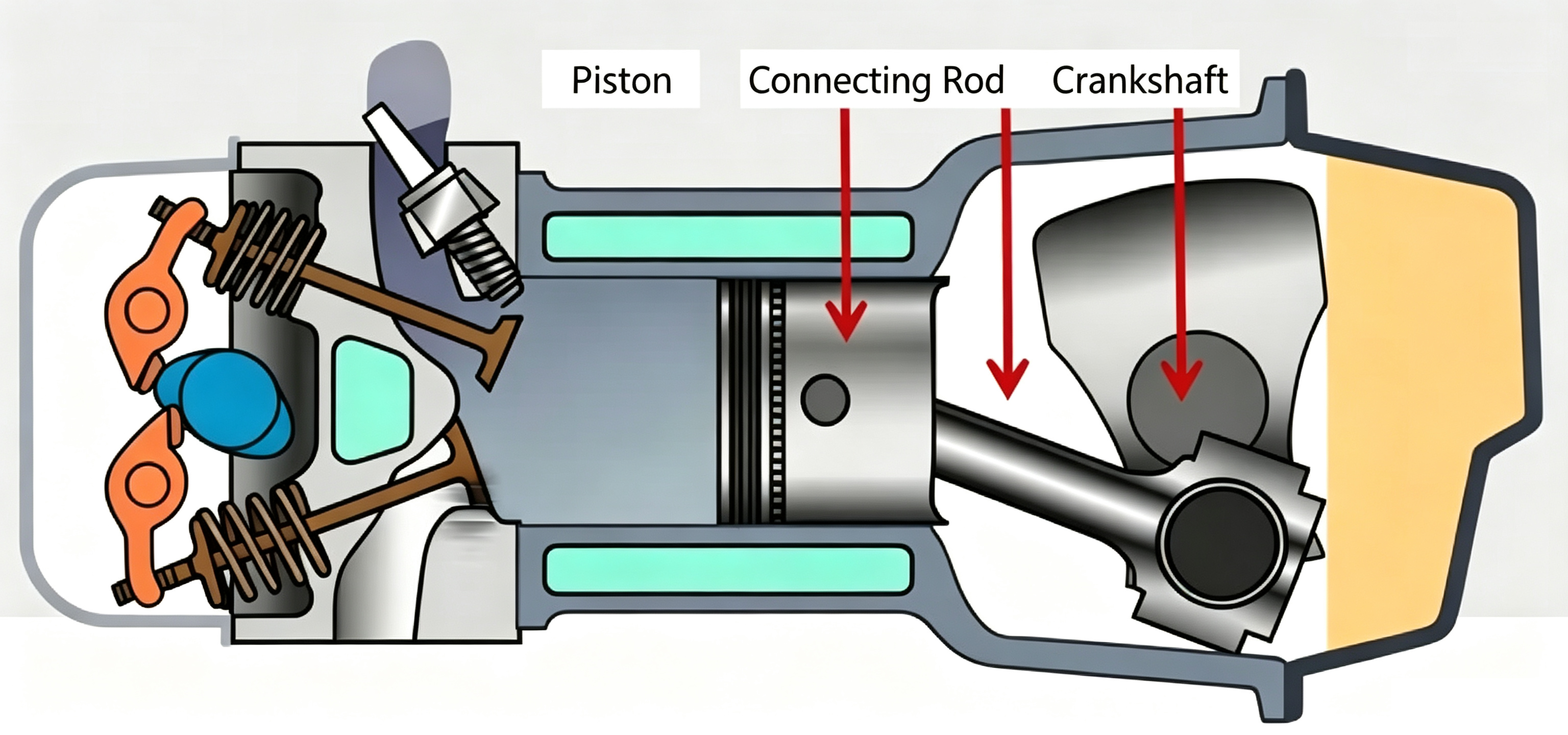
Air and atomized diesel are compressed and heated inside the cylinder. The diesel ignites spontaneously, pushing the piston to perform reciprocating motion.
1.3 Crankshaft Motion Conversion
The linear reciprocating motion of the piston is converted into rotational mechanical energy of the crankshaft via the connecting rod, which in turn drives the generator rotor to spin.
1.4 Four‑Stroke Cycle
Intake → Compression → Power → Exhaust, running in continuous cycles. The flywheel maintains stable rotating speed.
2. Operating Principle of the Generator
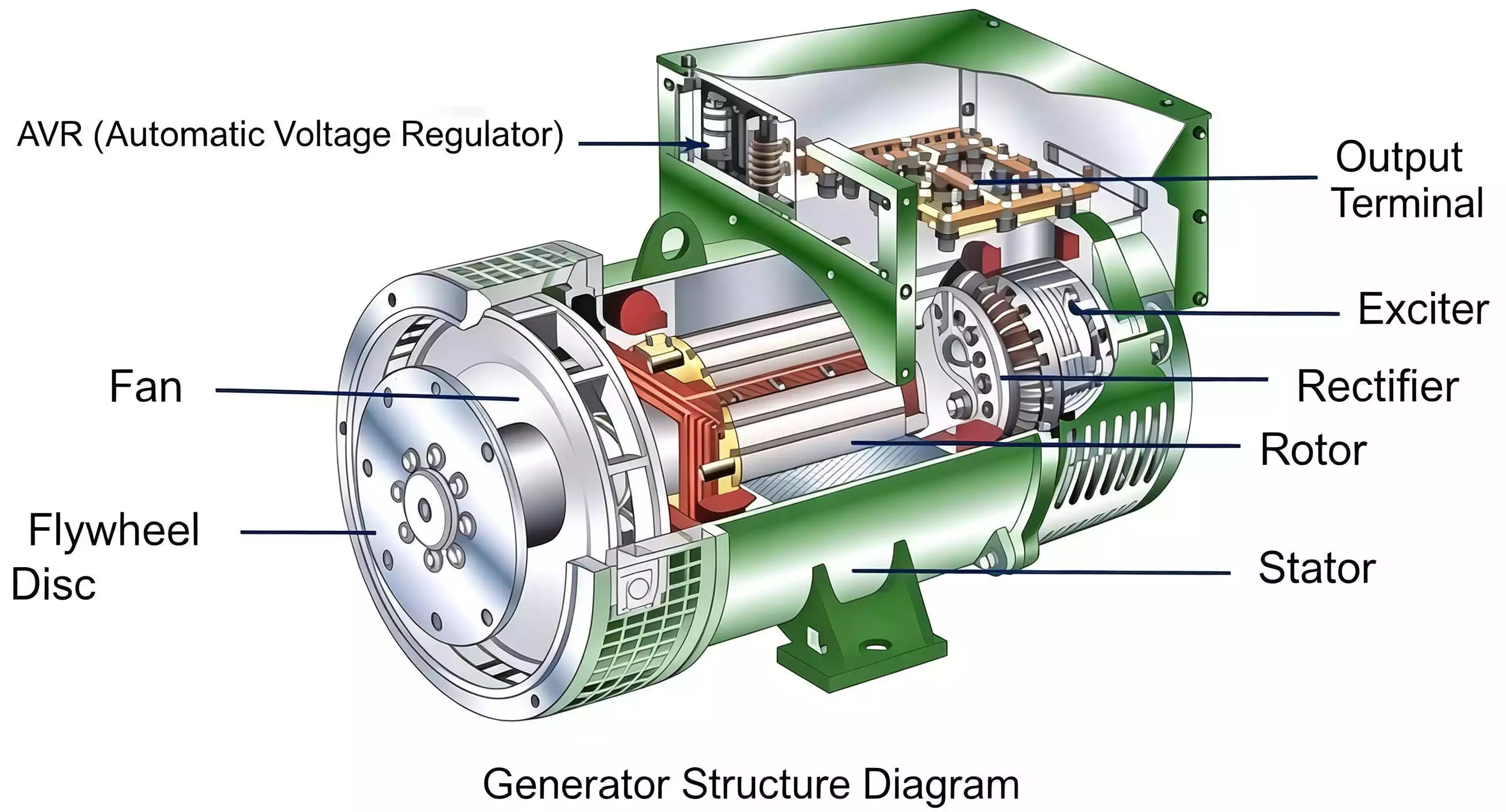
The generator converts the mechanical energy output by the diesel engine into electrical energy. Simply put, the generator is an energy converter . Relying on the principle of electromagnetic induction , it transforms mechanical energy into electrical energy. This is realized either by rotating coils inside a magnetic field or rotating a magnetic field inside coils. Electricity will be generated as long as relative motion occurs to cut the magnetic field lines .
III. What is Four‑Stroke Cycle?
The working cycle of each engine cylinder consists of four strokes: intake, compression, power and exhaust. To complete one full working cycle for a cylinder, the piston reciprocates twice and the crankshaft rotates two revolutions.
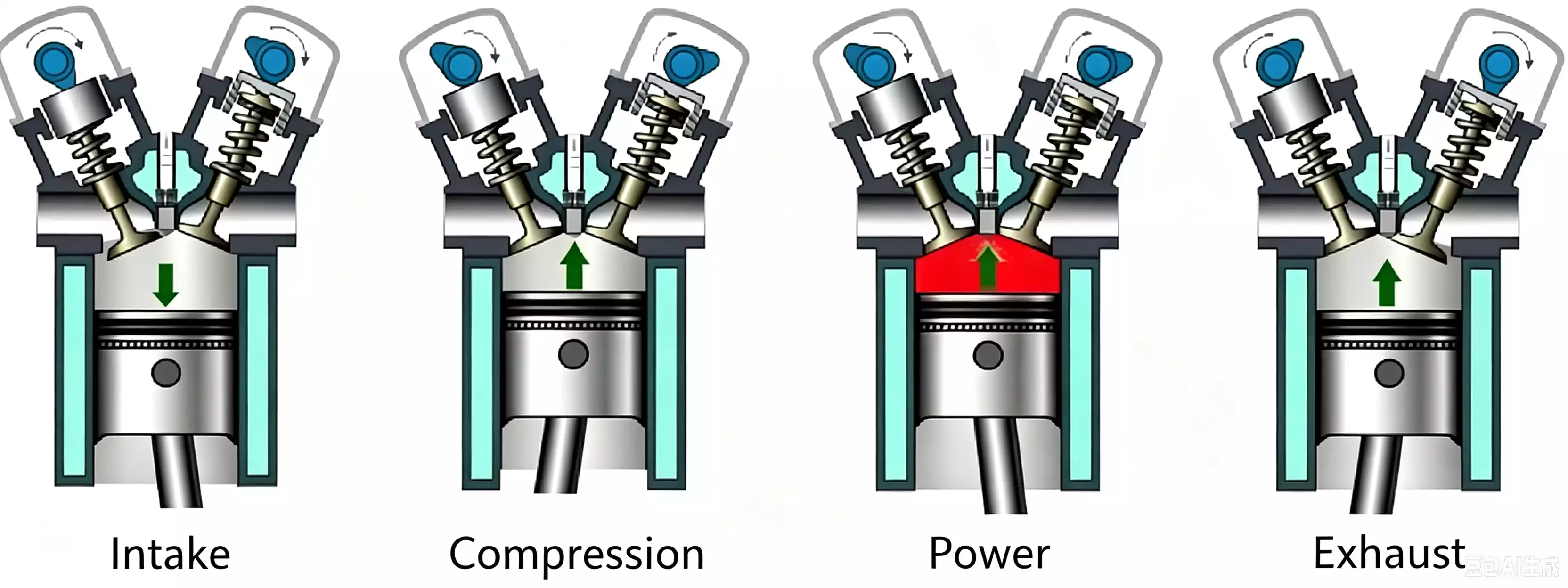
1.Intake Stroke : The intake valve opens. The piston moves down from top dead center to enlarge the cylinder volume.
2.Compression Stroke : Both intake and exhaust valves are closed. The piston moves upward from bottom dead center to reduce the cylinder volume.
3.Power Stroke : Both intake and exhaust valves are closed. Diesel fuel is injected in atomized form and self‑ignites under high temperature and pressure. The piston travels downward from top dead center and drives the crankshaft to rotate via the connecting rod.
4.Exhaust Stroke : The exhaust valve opens. The piston moves upward from bottom dead center, pushing burnt exhaust gas out of the cylinder.
IV. Contents of Routine Maintenance
The mode‑selection switch of the diesel generator set shall be kept at **Automatic Mode** in daily operation to place the unit in hot‑standby status.
1.Fuel System
1.1 Check the fuel tank oil level.
1.2 Inspect the sealing of fuel inlet and return pipelines for oil leakage.
2.Lubrication System
2.1 Verify that the engine oil level is within normal range.
2.2 Check whether the oil quality meets requirements.
3.Cooling System
3.1 Check the water tank and connected water pipes for water leakage.
3.2 Check the water tank level when necessary.
4.Start‑up Control System
4.1 Inspect the charger for starting battery.
4.2 Confirm the starting battery voltage is normally higher than 24 V. Check its appearance and electrolyte level.
4.3 Ensure control switches of generator and paralleling cabinet are in correct positions.
5.Air System
5.1 Confirm fresh‑air damper and exhaust damper are fully open.
5.2 Check normal operation status of damper control cabinet and its power supply cabinet.
6.Perform manual start‑up test every two weeks, and automatic‑mode start‑up test every quarter.
6.1 Each test run shall last no less than 15 minutes.
6.2 Manual test runs shall be conducted under no‑load condition.
6.3 Automatic test runs shall be performed with load connected.
V. Test‑mode Procedures (Basic Procedure; minor variations exist among different models)
1.Automatic Mode
Disconnect mains power supply. The control‑system PLC receives power‑loss signal. After a 3‑second delay, the unit starts automatically and switches between mains and generator power. The generator reaches rated speed and connects to load within 12 seconds.
Upon completion of trial run, close the mains switch. The ATS switch automatically switches back to mains supply. The unit runs under no‑load condition for 3 minutes and shuts down automatically.
2.Manual Control
Turn the unit mode‑selection switch to Manual Control . Press the Manual Start button on control panel, and the unit starts immediately. Release the button once combustion sound is heard, and the unit keeps steady operation.
After 2‑3 minutes of running, press the Close Breaker button to close the ME breaker, and observe output voltage and frequency. To supply power to loads, press Unit Power Supply button to close ATS switch for load feeding.
For shutdown, follow the sequence: cut off load → open breaker → manual stop.


