
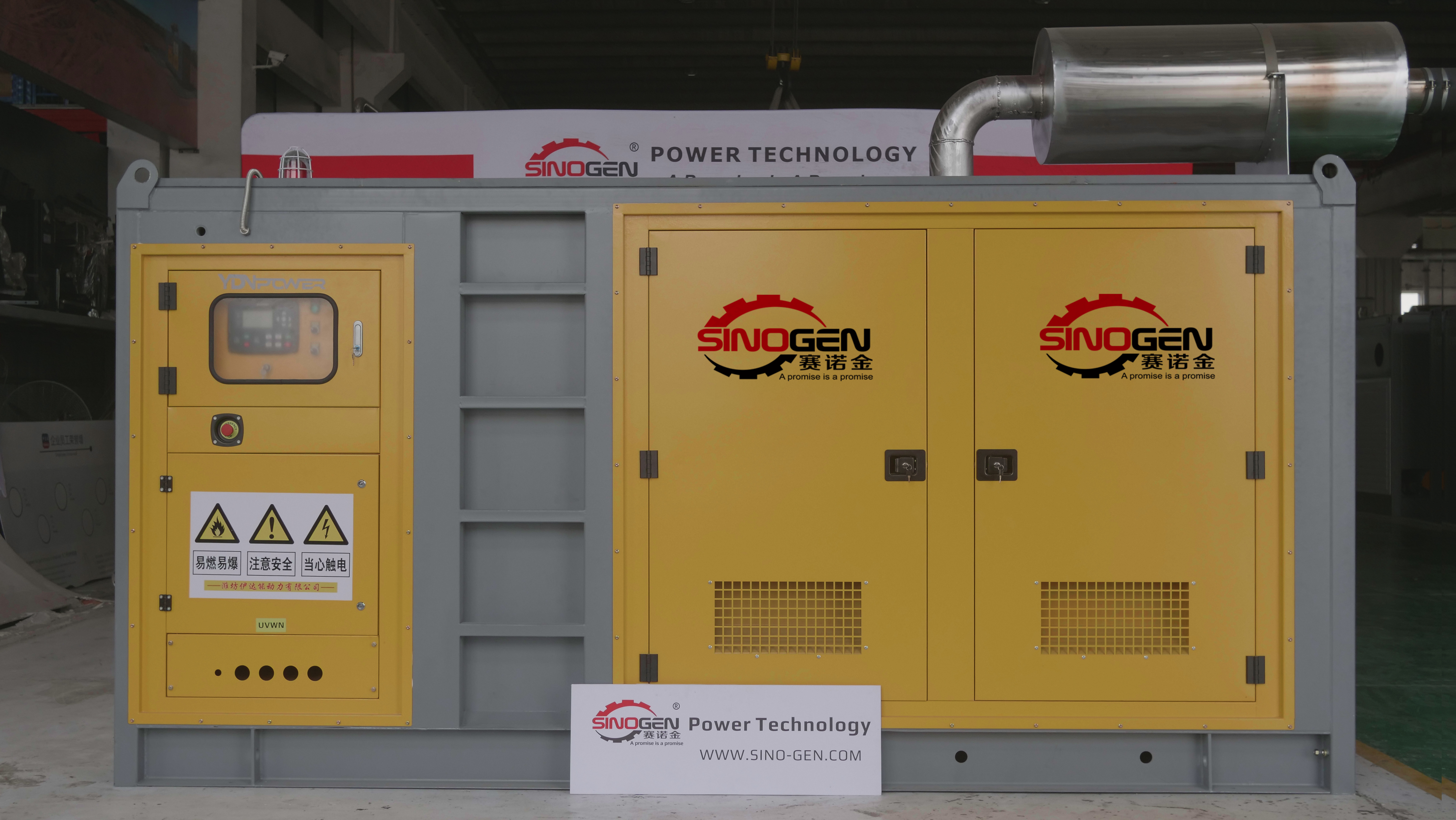
For integrated diesel generator systems, the structural strength of a diesel generator container is far from a general indicator—it directly determines the unit’s vibration resistance, outdoor environmental adaptability, and long‑term operational safety.
Today SinoGen will answer your questions.
- Material Selection
1. Main Structure & Load‑Bearing Materials (Core Stress Layer)
Main structure: Manufactured from Q345 high‑strength steel to ensure overall anti‑deformation performance of the container body.
Special load‑bearing components: All load‑bearing structural parts adopt Q345 steel, with enhanced reinforcement at core stress points including the unit mounting area and bottom beams.
Wall materials: Constructed from SPA-H corrosion‑resistant steel, balancing rust prevention and structural rigidity.
2. Protective & Auxiliary Materials (Durability Enhancement Layer)
Galvanized steel sheet: Complies with high zinc‑coating standards and passes salt spray tests, preventing strength degradation caused by corrosion.
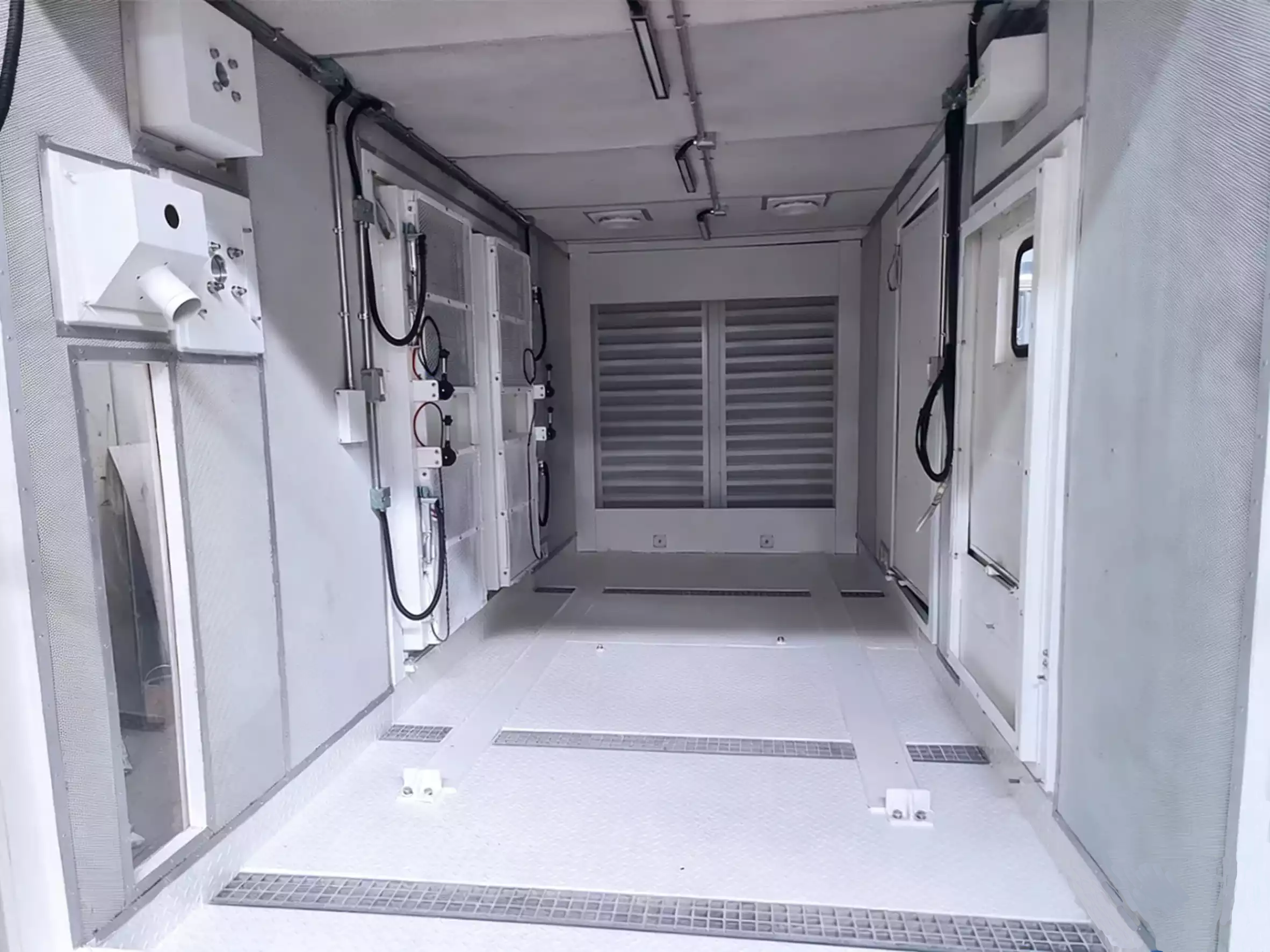
Inner wall structure: Light steel keel + ≥80 kg/m³ hydrophobic rock wool + fully wrapped fiberglass cloth + ≥0.8 mm perforated galvanized steel sheet.
Perforated panels are installed via clip‑on physical fixing to avoid welding damage to the galvanized layer and subsequent rusting.Electric louver: Equipped with 10 mm thick hollow aluminum alloy blades, verified to be deformation‑free with standard impact resistance.


- Key Structural Design
1. Enclosure & Load‑Bearing Structure
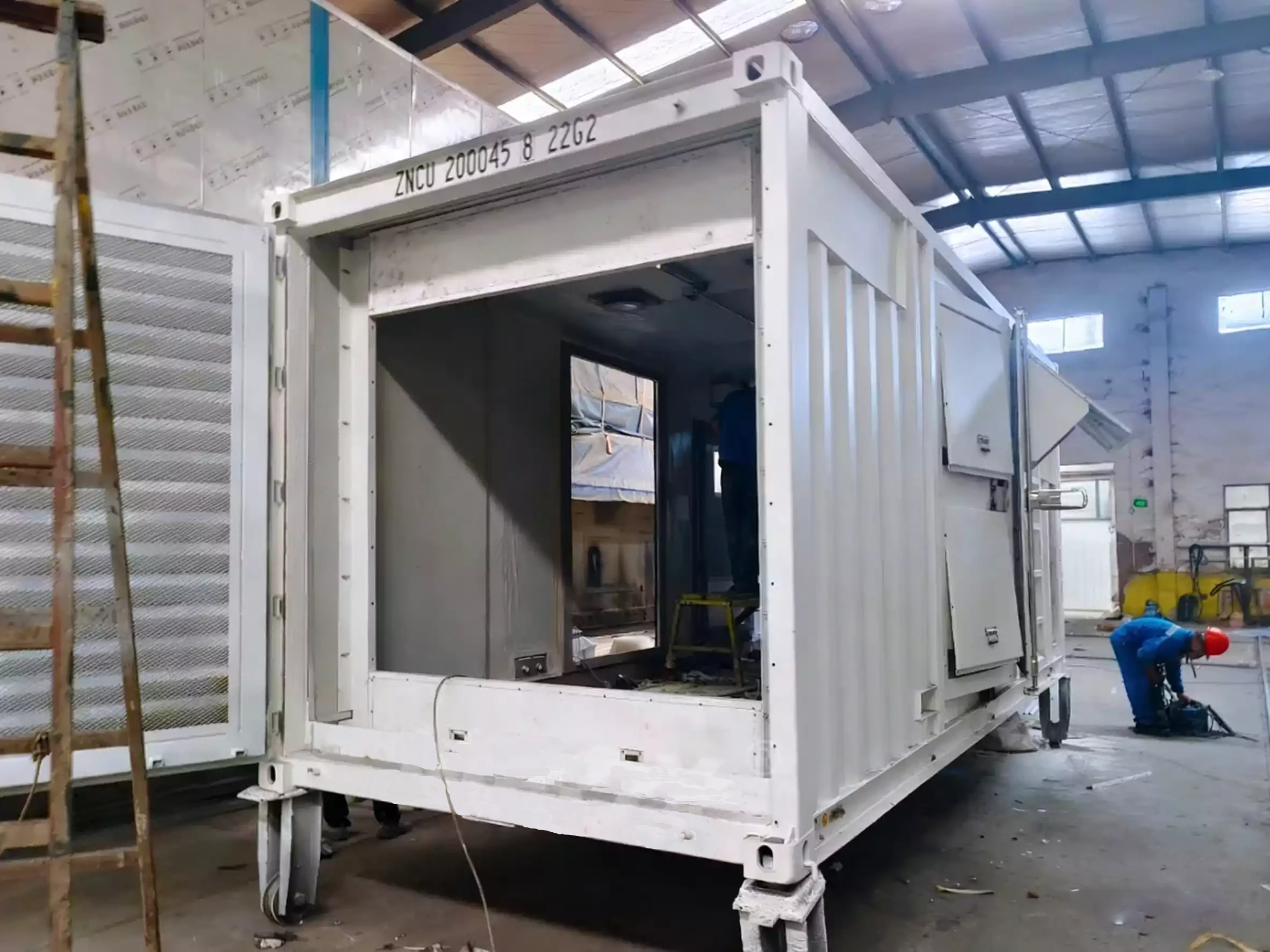
Exterior wall panels / Roof panels: Made of weather‑resistant alloy steel, formed in one step by moulding, with a panel thickness of ≥3 mm.
This completely eliminates roof sagging, water accumulation and corrosion.
Container floor: Adopts anti‑slip patterned steel plate, with full transverse welding and intermittent welding to the bottom beams.
This ensures sufficient load‑bearing area while releasing welding stress.
2. Unit Installation & Maintenance Structure
Unit base plate: 16 mm thick × 200 mm wide Q345 steel plate, fully welded to the floor patterned plate.
It features high dynamic load capacity and adapts to vibration during unit operation.
Maintenance door: Double‑layer thick cold‑rolled steel sheet (filled with sound‑insulating cotton in between).
The door frame is reinforced with thick angle steel, and equipped with stainless steel automatic door closers, limit hooks and emergency escape push bars, ensuring no deformation during opening and closing.
- Special Environmental Loads
1. Enclosure & Load‑Bearing Structure
Exterior wall panels / Roof panels: Made of weather‑resistant alloy steel, formed in one step by moulding, with a panel thickness of ≥3 mm.
This completely eliminates roof sagging, water accumulation and corrosion.
Container floor: Adopts anti‑slip patterned steel plate, with full transverse welding and intermittent welding to the bottom beams.
This ensures sufficient load‑bearing area while releasing welding stress.
2. Unit Installation & Maintenance Structure
Unit base plate: 16 mm thick × 200 mm wide Q345 steel plate, fully welded to the floor patterned plate.
It features high dynamic load capacity and adapts to vibration during unit operation.
Maintenance door: Double‑layer thick cold‑rolled steel sheet (filled with sound‑insulating cotton in between).
The door frame is reinforced with thick angle steel, and equipped with stainless steel automatic door closers, limit hooks and emergency escape push bars, ensuring no deformation during opening and closing.
- Accessories & Installation
1. Corrosion‑Resistant Accessory Selection
Moving parts / Hardware: Made of SUS304 stainless steel or hot‑dip galvanized material.
Key accessories: Hinges, door locks and louvers operate smoothly without jamming or corrosion.
2. Installation & Fixing Standards
Welding requirements: Key parts such as walls, bottom beams and base plates adopt full welding, with a weld inspection pass rate of ≥98%.
Intermittent welding is applied to non‑critical areas to ensure structural integrity.
Fasteners: High‑strength special bolts (with lock washers) are used to eliminate loosening risks under unit vibration.
Installation reliability: All structural components (walls, floor, base plates, maintenance doors) are mainly connected by welding (full welding at key parts).
Accessories are fixed with special bolts or connectors to ensure no loosening under operational vibration and external environmental impact.
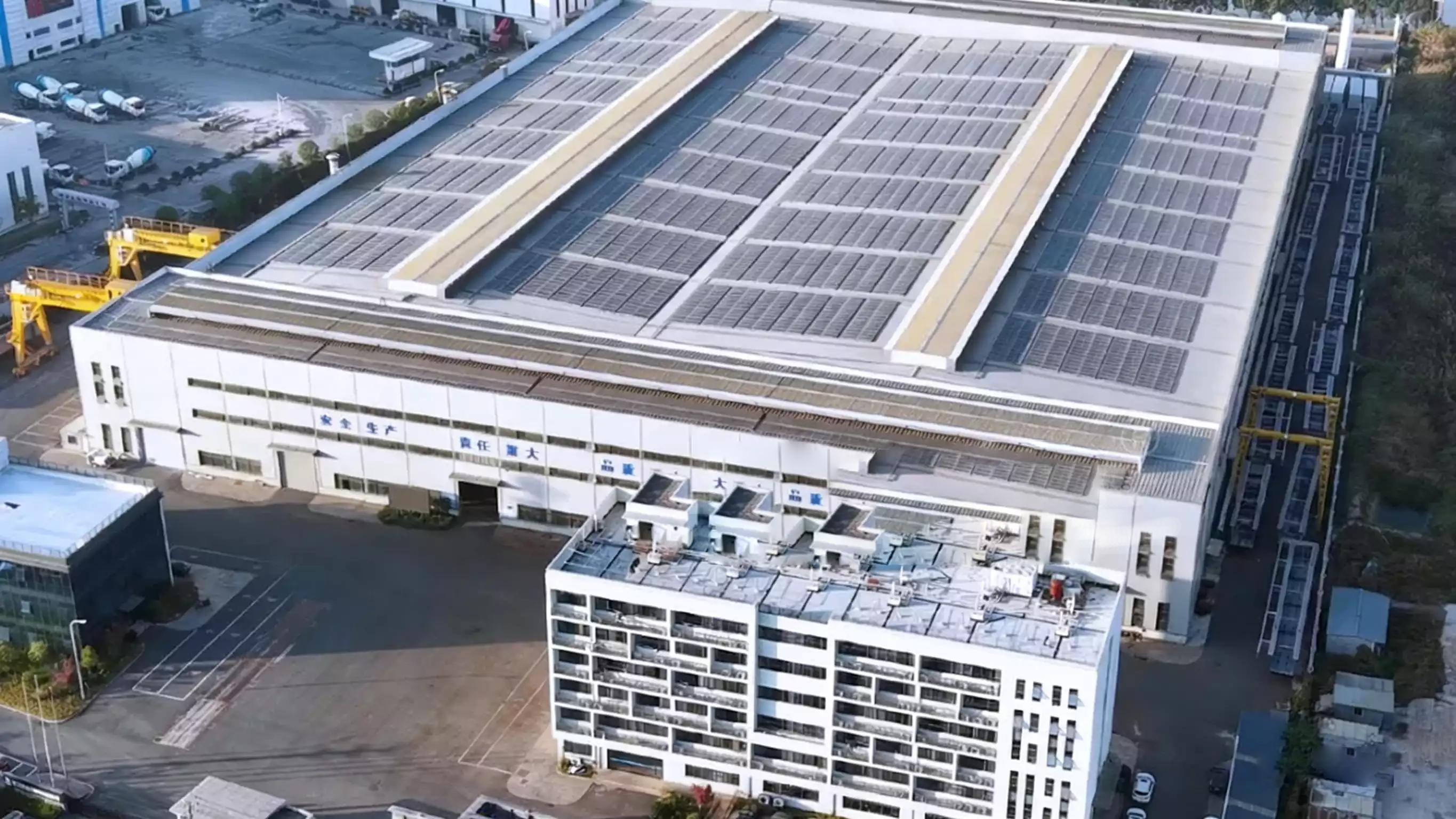
- The structural strength of a diesel generator container is not an isolated technical indicator, but a systematic project implemented throughout the entire production process.
2.focuses on materials and craftsmanship, committed to delivering durable and stable diesel generator container solutions.


